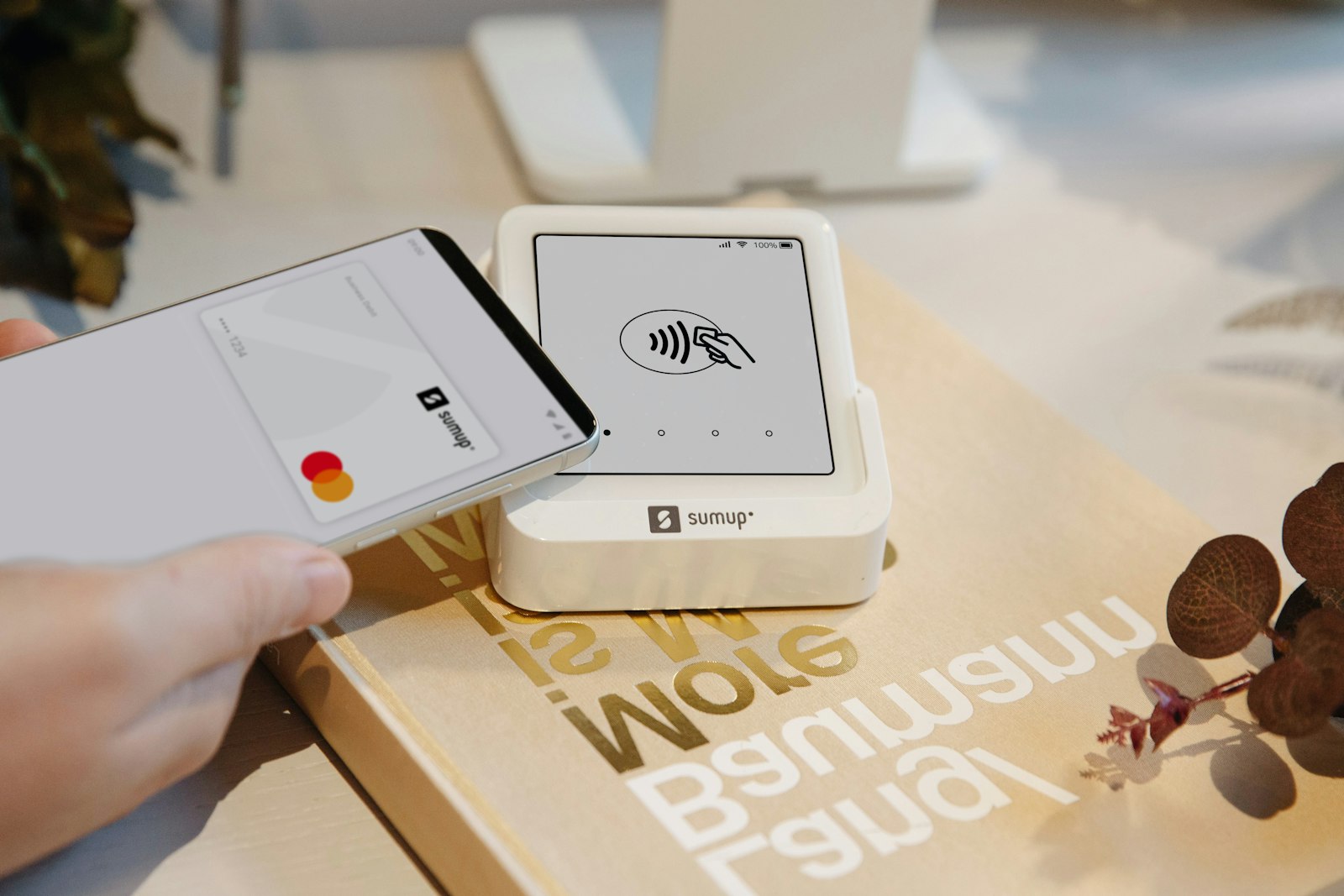
The Sale Is Done. So Where’s the Money?
The Hidden Cost of Payment Settlement Delays
Imagine running a restaurant that just had its busiest weekend of the month.
Customers filled every table. Orders kept coming. By closing time, your business had processed $12,000 in sales.

Sounds like a successful weekend, right?
Now imagine it’s Monday morning. Your food supplier needs $4,500 to restock your kitchen. Your employees are expecting their wages, and another payment is due.
There’s just one problem.
You’ve made the sales, but a significant portion of that money hasn’t reached your available balance yet.
Your payment dashboard shows successful transactions. Your customers have their food. Your business has done its job.
But you’re still waiting to use the money you’ve earned.
For businesses operating on tight margins, that gap between making a sale and accessing the proceeds can create problems that extend far beyond payment processing.
And it raises a simple question: In a world where customers can pay in seconds, why should businesses have to wait to use their money?
A Successful Payment Doesn’t Always Mean Available Money
Modern payment technology has made checkout incredibly convenient.
Customers can tap their phones, scan a QR code, or complete an online purchase almost instantly.
From the customer’s perspective, the transaction is finished.
For the merchant, however, the financial process may only be beginning.
Traditional card payments can involve several stages:
- Authorization: The customer’s bank approves the transaction.
- Clearing: The relevant institutions exchange transaction details.
- Settlement: Funds move between the participating financial institutions.
- Merchant payout: The payment provider makes the proceeds available to the business, according to its payout arrangements.
As Mastercard’s explanation of payment processing shows, authorization and settlement are separate parts of a transaction.
Depending on the provider, account arrangement, payment method, and banking schedule, merchants may receive their money the next business day or several business days later.
Some providers offer accelerated or instant payouts, but those services may come with eligibility requirements, additional charges, or other conditions.
For example, Stripe’s guide to payouts distinguishes between settlement speed and the schedule used to transfer available funds to a business.
That distinction matters.
A payment marked “successful” is not necessarily money a business can spend immediately.
And while financial institutions process payments behind the scenes, everyday business expenses don’t stop.
The Real-World Problems Settlement Delays Create
Settlement delays might look harmless on a payment report. A few extra days can seem insignificant.
But business owners don’t operate according to payment processing schedules.
They operate according to customer demand, inventory requirements, payroll deadlines, and unexpected expenses.
Consider these three everyday scenarios.
The examples below are illustrative, showing realistic situations rather than claiming to describe specific businesses.
1. The Restaurant That Can’t Restock Fast Enough
A restaurant has a fantastic weekend, generating thousands of dollars in digital payments.
By Monday morning, its kitchen needs fresh ingredients. Its supplier requires payment before releasing another delivery.
Unfortunately, much of the restaurant’s recent revenue is still awaiting payout.
The owner faces an uncomfortable choice: use existing cash reserves, borrow money, negotiate additional time with the supplier, or delay the order.
Each option carries a potential cost.
If supplies arrive late, the restaurant could run out of popular menu items. If the owner borrows, financing costs could reduce already-tight margins.
The frustrating part?
The restaurant has customers. It has revenue. It has demand.
What it doesn’t have is immediate access to all the proceeds of its successful sales.
Faster settlement could help the owner put that revenue back to work sooner.
2. The Online Store That Misses Its Biggest Opportunity
Imagine an online retailer selling a trending product.
A video goes viral, orders flood in, and the business generates $25,000 in sales over a weekend.
Demand is soaring. The opportunity to grow is right there.
But inventory is disappearing quickly.
The supplier has additional stock available, provided the business can pay promptly.
There’s one complication: a substantial portion of those customer payments is still pending settlement or payout.
The business might have to use credit, wait for funds, or risk losing momentum while a competitor captures the remaining demand.
This is where delayed settlements become more than an accounting inconvenience.
They can become a barrier to growth.
Sometimes, the difference between a business taking advantage of an opportunity and missing it is how quickly it can access its own revenue.
3. The Service Business Facing an Unexpected Expense
Picture an auto repair shop that has just completed several major jobs.
Customers have paid, and the transactions have been approved.
Then an essential piece of equipment breaks.
Repairs are expensive, but waiting could mean turning away customers and losing revenue.
The owner needs access to working capital immediately.
If recent payments remain unavailable, the business must rely on reserves or alternative financing to cover the unexpected expense.
The underlying issue is the same across all three examples.
Money that exists in a payment report cannot solve an operational problem until the business can actually use it.
The Hidden Cost of Waiting for Your Own Money
Settlement delays aren’t always recorded as a direct expense.
There’s no invoice labeled “Cost of Waiting for Your Revenue.”
But their financial impact can be very real.
1. Cash Flow Becomes Harder to Manage
A business can be profitable on paper while struggling to meet immediate obligations.
Profit measures what remains after expenses. Cash flow determines whether money is available when those expenses need to be paid.
Those are two different things.
A company might generate strong sales throughout the week yet still experience financial pressure if incoming payments and outgoing obligations don’t align.
Delayed access to revenue makes that mismatch more difficult to manage.
2. Businesses May Need More Borrowed Money
When merchants cannot access their proceeds quickly enough, some bridge the gap with business credit cards, overdrafts, or short-term financing.
Borrowing isn’t necessarily bad. Businesses use credit strategically every day.
But borrowing simply because earned revenue hasn’t become available can introduce avoidable financing expenses.
The longer that gap continues, the more working capital a business may need to keep in reserve.
3. Inventory and Growth Opportunities Can Be Delayed
Retailers need inventory. Restaurants need supplies. Contractors need materials.
When access to funds is delayed, purchasing decisions may be delayed too.
For some businesses, that means slower restocking.
For others, it means missed discounts, postponed expansion, or turning down additional work.
Customers don’t necessarily care why a business cannot fulfill their order.
They simply expect the product or service to be available.
4. Financial Planning Becomes More Complicated
Business owners already have enough uncertainty to manage.
Customer demand changes. Suppliers adjust prices. Unexpected expenses appear.
Settlement delays introduce another variable: determining exactly when earned revenue will become available.
The more predictable that timing becomes, the easier it is to make short-term financial decisions using actual available balances instead of anticipated deposits.
How Much Working Capital Can Be Tied Up?
Consider a business processing an average of $20,000 in digital payments every day.
If its proceeds become available three days after each sale, a simplified, steady-state example looks like this:
| Payment metric | Amount |
|---|---|
| Average daily sales | $20,000 |
| Time before funds become available | 3 days |
| Gross sales awaiting availability | $60,000 |
That’s approximately $60,000 in recent sales moving through the payment pipeline at any given time, before accounting for fees, refunds, or other adjustments.
The money isn’t necessarily lost. It isn’t necessarily profit, either.
It’s revenue the business has generated but cannot yet fully deploy.
And for a company managing inventory, payroll, equipment costs, and supplier relationships, the timing of access can matter tremendously.
Faster settlement won’t automatically fix poor financial management.
But it can reduce the amount of time a business must operate without access to its newest revenue.
That’s a meaningful difference.
Payment Technology Has Evolved. Settlement Expectations Should Too.
For years, payment innovation has focused heavily on the customer experience.
Fewer checkout steps. Faster card readers. More convenient digital wallets. Easier online purchases.
Those improvements matter.
But merchants need innovation on their side of the transaction, too.
A payment experience shouldn’t be judged only by how quickly the customer can complete a purchase.
It should also be judged by how efficiently the merchant receives usable funds.
Fortunately, the financial industry is already moving in that direction.
Instant payment systems are expanding, giving participating institutions the ability to transfer money around the clock.
The Federal Reserve’s FedNow Service is one example of infrastructure designed to make funds available immediately to recipients through participating financial institutions.
Other payment providers offer accelerated settlement or instant payout services, although availability, timing, and pricing differ.
These developments demonstrate something important.
Waiting several business days for access to funds is no longer the only model available.
As technology evolves, merchants have more reason to question whether their payment infrastructure is supporting their operations or creating unnecessary financial friction.
Where TOKE Network Comes In
This is the problem TOKE Network is working to address.
TOKE is building blockchain-powered payment infrastructure designed to make digital payments more efficient for both consumers and merchants.
Rather than focusing exclusively on checkout convenience, the network places significant emphasis on what happens after a customer pays.
As a TOKE Merchant, payment settlement completes in approximately six seconds, with immediate access to settled funds through its supported settlement options.
That isn’t simply about displaying a successful transaction notification.
It’s about making funds available for the merchant to use without the same waiting period associated with slower payout arrangements.
TOKE also advertises merchant processing fees starting at 1.59%, depending on the applicable payment setup.
The goal is to address two common sources of payment friction: the cost of accepting payments and the time it takes to access their proceeds.
For merchants, that could mean greater flexibility when managing inventory, planning expenses, and responding to business needs.
The specific ways funds can be spent, transferred, or converted depend on the merchant’s chosen payment and settlement setup.
But the larger objective is straightforward.
Businesses should have more control over the money their customers have already paid them.
And achieving that shouldn’t require business owners to understand complicated blockchain terminology.
Customers want payments to be simple.
Merchants want payments to be affordable, dependable, and available when needed.
The technology should work toward those outcomes.
Faster Settlement Is About More Than Speed
It’s tempting to turn the future of payments into a competition over who can process a transaction the fastest.
But speed alone isn’t the most important outcome.
What matters is what businesses can do with that speed.
A restaurant that can replenish ingredients sooner.
An online retailer that can reorder inventory while demand is high.
A service provider that can pay for urgent equipment repairs without waiting for a scheduled payout.
These are operational benefits, not just technical achievements.
Faster access to funds gives businesses more flexibility to act when opportunities and obligations arise.
And when businesses have greater control over their working capital, they can spend more time focusing on customers, growth, and daily operations.
The Future of Payments Doesn’t End at Checkout
For too long, a successful payment has been treated as the finish line.
The customer taps. The screen displays “Approved.” Everyone moves on.
But for the business, the transaction isn’t truly useful until the proceeds are available to support its operations.
That is why settlement deserves more attention.
Not because every business faces the same delays or because faster settlement solves every cash-flow challenge.
But because payment infrastructure should make running a business easier, not add unnecessary obstacles between earned revenue and usable funds.
The next stage of payment innovation isn’t just about helping customers pay faster.
It’s about helping businesses put their money to work sooner.
Because making the sale is only half the story. Having access to the money is what helps keep the business moving.
Learn how TOKE Network is rethinking merchant payments at www.gotokes.com.