The Hidden Cost of Card Payments: Why Merchants Are Looking for a Better Way
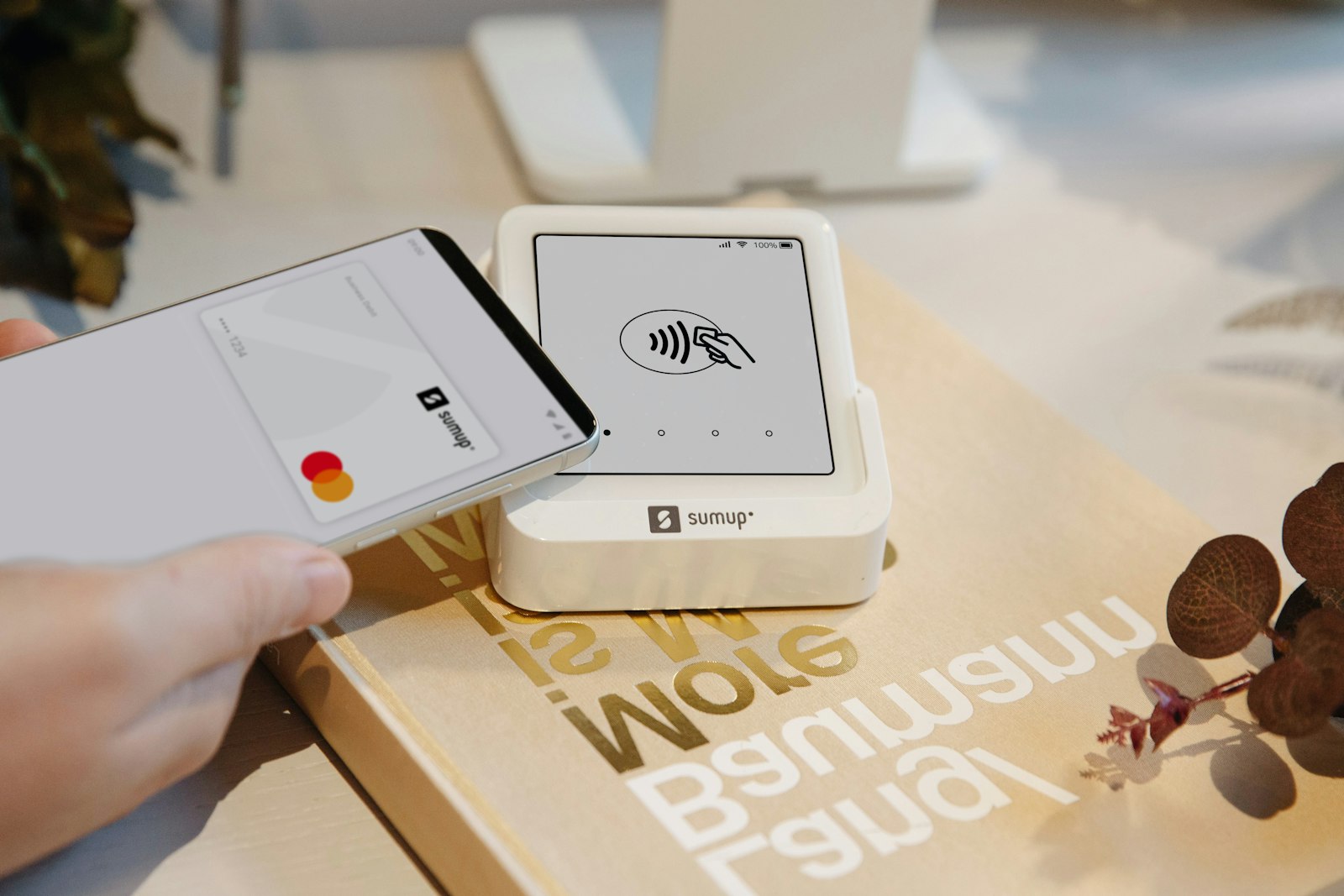
Every time a customer taps a card, the transaction looks almost effortless. Behind that tap is a much more complicated system.
Payment networks, banks, processors, intermediaries, authorization systems, settlement systems, fraud infrastructure, and other participants can all play a role in moving money from the customer to the merchant. That infrastructure helped build the modern commerce economy. But it also costs money. And ultimately, somebody pays for it.

There Is No Such Thing as a Free Payment
Consumers rarely see the full economics behind a card transaction. They see the purchase price. The merchant sees something else: the purchase price minus the cost of accepting the payment. Depending on the merchant, card type, processor, transaction structure, and additional services involved, those costs can add up.
The merchant then has a limited number of options.
- Absorb the cost and reduce margin.
- Increase prices.
- Set a minimum purchase amount.
- Add a card surcharge where permitted.
- Or encourage the customer to use another form of payment.
That means payment-processing costs are not only a merchant issue. They can become a consumer issue too.
Rewards Do Not Make Processing Costs Disappear
Cashback, points, airline miles, and other card rewards have become enormously popular. But rewards are part of a larger economic system. The money used to support incentives does not appear from nowhere. Payment-related costs exist somewhere within the transaction chain, and merchants have to account for those expenses when pricing their products and services.
This creates an interesting contradiction. Consumers love rewards. Merchants want lower acceptance costs. Both are rational.
The real opportunity is to redesign the underlying economics so the transaction itself requires fewer costly layers.
Why Payment Architecture Matters
Traditional payment systems evolved over decades. They work at tremendous scale, but they were built around multiple organizations coordinating authorization and settlement.
Blockchain technology introduces another possibility. Instead of passing a transaction through the same sequence of intermediaries, blockchain-based payment networks can allow value to move more directly between parties. Reducing layers can create opportunities for lower processing costs and faster access to funds.
That is the economic principle behind TOKE Network. TOKE is developing a blockchain-powered payment infrastructure designed to connect customers and merchants more directly while simplifying the transaction process. For merchants, the company currently advertises acceptance fees as low as 1.59%. But the percentage itself is only one part of the story.
Cash Flow Matters as Much as the Processing Rate
Ask a business owner what matters most and payment-processing fees will probably be on the list. Cash flow may be even higher.
A sale is valuable, but a merchant also needs access to the proceeds. Delays between a transaction and usable funds can affect inventory purchases, payroll, supplier payments, operating expenses, and working capital.
That is why settlement speed matters. TOKE Network is designed around rapid blockchain settlement and immediate access options for verified merchants rather than treating settlement as an afterthought. In a high-volume business, improving both transaction costs and access to funds can have operational consequences far beyond the checkout counter.
Crypto Acceptance Does Not Have to Mean Betting on Crypto
For many merchants, one objection immediately appears: “What if the cryptocurrency changes value after I accept it?” It is a legitimate concern.
A business should be able to evaluate crypto as a payment method separately from deciding whether it wants exposure to a particular digital asset. Modern crypto payment infrastructure can address that problem by supporting conversion and settlement options.
TOKE’s infrastructure is designed to support TOKE alongside assets such as USDC, Bitcoin, Ethereum, and Solana, with conversion options intended to let merchants manage what they ultimately receive.
This turns the conversation from: “Do I want to speculate on cryptocurrency?” into: “Is this a useful payment rail for my business?” Those are very different questions.
The Best Merchant Technology Fits the Existing Business
Another reason alternative payment methods struggle is integration. A technology can be impressive and still fail if accepting a payment creates more work for the cashier, the customer, or the merchant. The checkout experience has to remain simple.
TOKE Network is designed around familiar payment interactions such as QR codes and tap-to-pay rather than expecting merchants to redesign the entire buying experience around cryptocurrency.
The long-term objective is not to make a checkout counter look like a crypto exchange. It is to make a blockchain transaction feel like a normal payment.
Lower Costs Can Create a Larger Economic Loop
There is also a broader effect. If payment infrastructure becomes less expensive, merchants have more flexibility over what happens to the savings.
- A business could retain additional margin.
- It could create discounts.
- It could fund loyalty incentives.
- It could develop promotional programs.
- It could reinvest the savings elsewhere in the customer experience.
Not every merchant will make the same decision, but lower friction creates options.
This is one of the principles behind the larger TOKE ecosystem, which connects merchants, consumers, traders, and investors around the activity taking place across the network. The stronger the real-world utility of that network becomes, the less the TOKE story depends on cryptocurrency being treated merely as a speculative asset.
Payments Are Infrastructure, and Infrastructure Eventually Gets Rebuilt
Payment technology has changed repeatedly. Cash gave way to checks. Checks gave way to cards. Cards moved online. Phones became wallets. Contactless payments became normal.
The next transformation may involve blockchain, but the winner will not be determined by the word “crypto.” It will be determined by economics and usability.
Can a new system cost less? Can merchants get access to their funds faster? Can customers understand it? Can it integrate with the places people already shop? Can businesses accept digital assets without being forced to speculate on them? Those are the questions that matter.
Blockchain gives the payment industry a new architecture with which to answer them. TOKE is building its network around one simple proposition: if unnecessary friction can be removed from the transaction, more of the value can remain with the people actually buying and selling. That is a payment problem worth solving.
Want to learn how TOKE Network is approaching merchant payments? Visit GoTokes.com and explore the merchant platform.